Followers vs following on Twitter/X
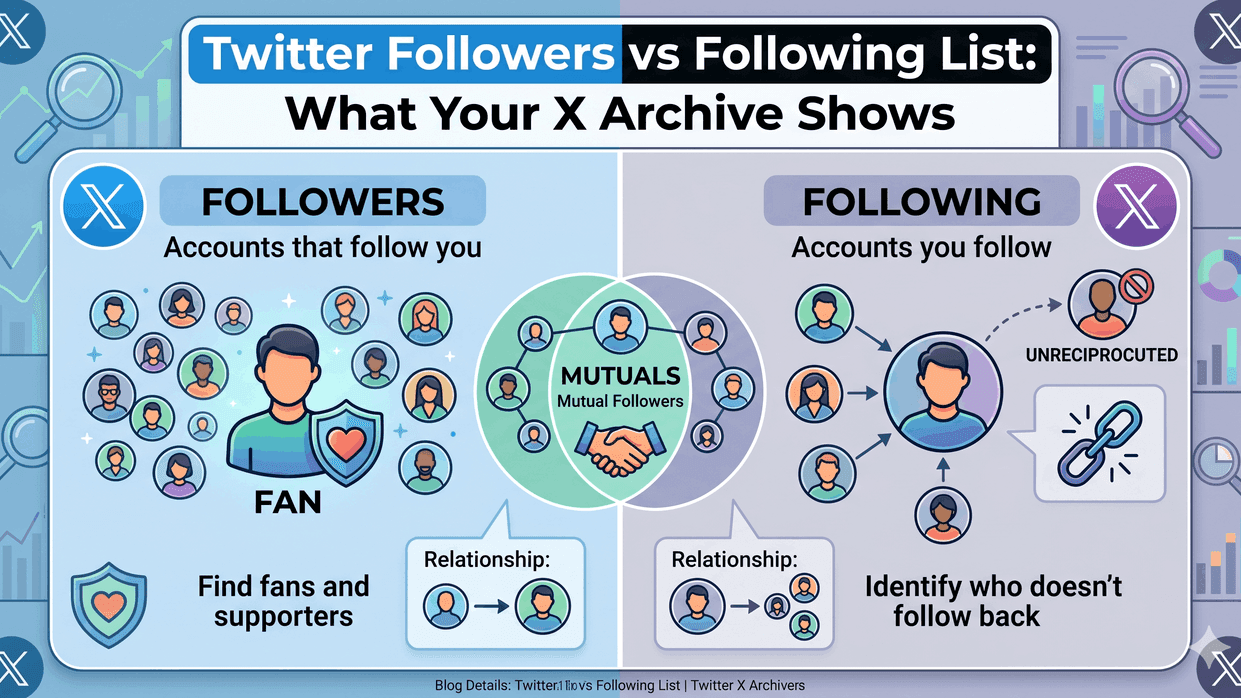
Your Twitter/X account has two basic relationship lists:
- Followers: accounts that follow you.
- Following: accounts you follow.
That sounds simple, but most follower cleanup questions come from comparing the two lists. When you compare followers and following, you can find mutuals, fans, and accounts that do not follow you back.
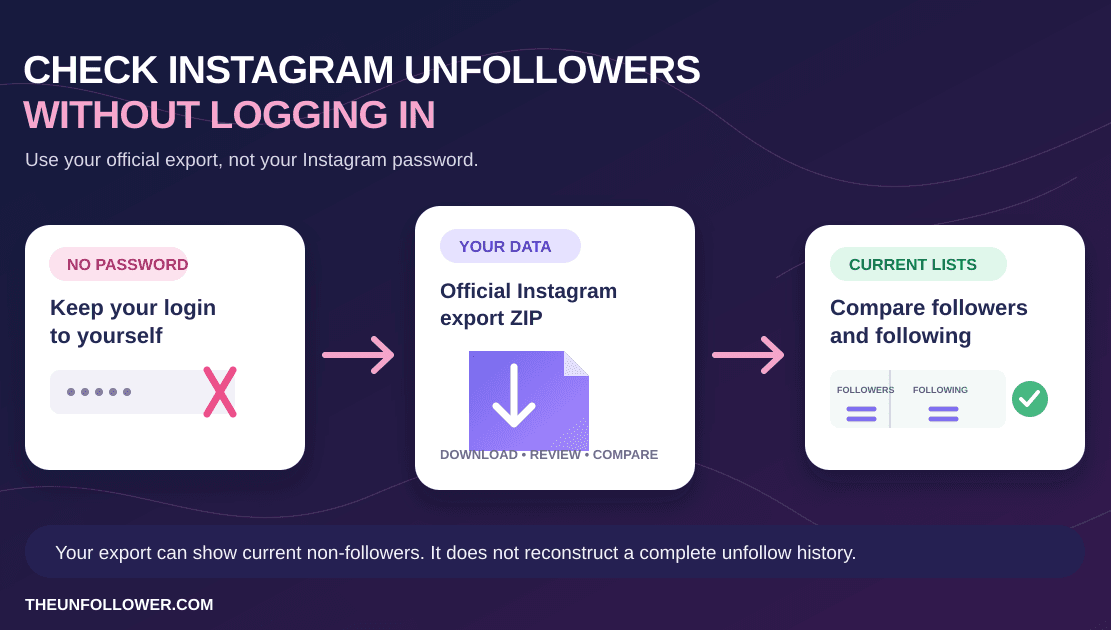
Your official X/Twitter archive can help you review your lists safely without a login or giving your account password to a third-party app.
Compare Your X Followers and Following
Upload your official X/Twitter archive to see non-followers, fans, mutuals, followers, and following in one place.
Open the X Unfollower TrackerWhat your followers list means
Your followers list contains accounts that currently follow you. These are people, brands, bots, creators, customers, friends, or strangers who have chosen to receive your posts in their timeline or following feed.
A follower count by itself can be misleading. A large number may include inactive accounts, bots, old acquaintances, or people who never engage. A smaller list may be more valuable if it contains real customers, collaborators, or community members.
When reviewing followers, useful questions include:
- Are these accounts relevant to what I post now?
- Do I recognize key customers, peers, or creators?
- Are there obvious spam patterns?
- Has the audience changed after a campaign or viral post?
What your following list means
Your following list contains accounts you currently follow. This list shapes your feed and tells X what kind of content you may want to see.
A bloated following list can make your feed noisy. It can also make it harder to notice people you actually care about.
Reviewing your following list can help you find:
- old accounts you followed years ago;
- inactive profiles;
- brands you no longer care about;
- accounts that post too often;
- people you followed only for a temporary reason;
- accounts that do not follow you back.
The goal is not to make the smallest possible following list. The goal is to make the list intentional.
What “not following you back” means
An account is not following you back when it appears in your following list but not in your followers list.
Example:
- You follow
@example. @exampledoes not follow you.- The account appears in your non-followers list.
This is one of the most common reasons people search for a Twitter unfollower tracker or Twitter following list checker. If you want to check who doesn't follow you back on X safely, comparing followers vs following via your archive is the recommended workflow.
But be careful with the interpretation. Not following you back does not always mean someone recently unfollowed you. They may never have followed you in the first place.
What “fans” means
A fan is an account that follows you while you do not follow them back.
This list can be surprisingly useful. It may include:
- customers;
- readers;
- community members;
- people who discovered you through a thread;
- accounts you may want to follow back;
- leads or collaborators you missed.
If you only focus on who does not follow you back, you may miss the more positive side of the data: people already paying attention to you.
What “mutuals” means
Mutuals are accounts where both sides follow each other. On X/Twitter, mutuals often represent your closer network.
For creators and founders, mutuals can include peers, friends, collaborators, journalists, customers, and people you regularly interact with.
A mutual list is useful when you want to understand the core of your account, not just the total size of your audience.
What your X/Twitter archive can show
When your archive includes follower and following data, a tracker can compare the lists and group accounts into categories.
TheUnfollower can use the archive to show:
- accounts you follow that do not follow you back;
- accounts that follow you while you do not follow them;
- mutual relationships;
- full follower and following lists.
Because this comes from an archive you download from X, you do not need to give TheUnfollower your X password. You upload the ZIP for processing and review the results.
If you need the archive first, read: how to download your X/Twitter archive.
What your archive cannot prove by itself
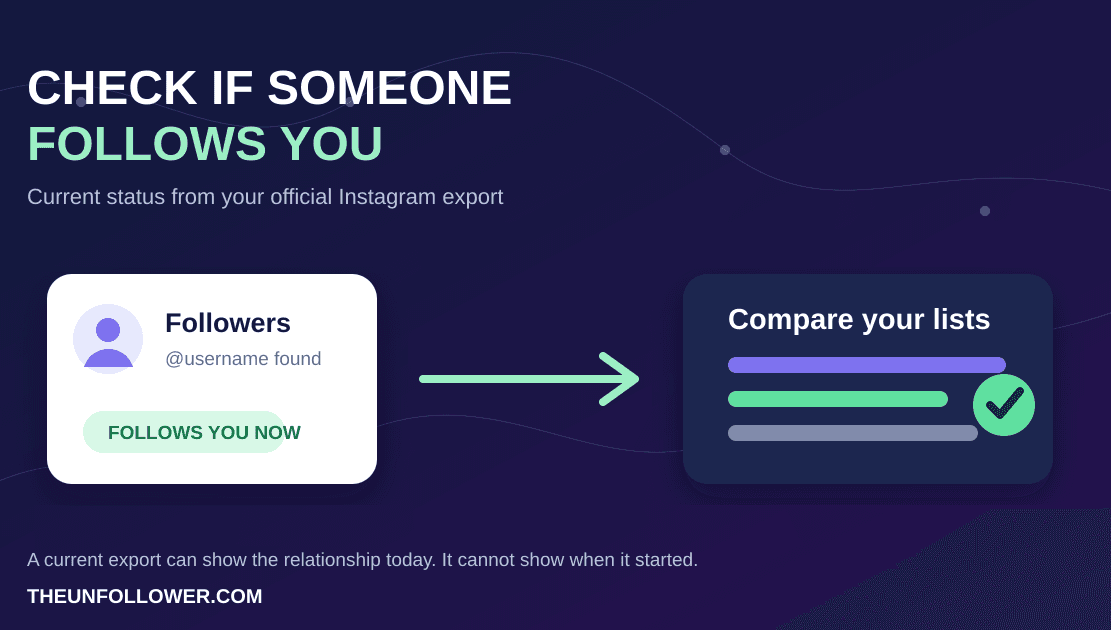
A single archive is a snapshot. It shows current account relationships from that export, not necessarily a full historical timeline.
That means:
- it can show who does not follow you back now;
- it can show who follows you now;
- it can show current mutuals;
- it may not prove exactly who unfollowed yesterday;
- it cannot explain why someone followed or unfollowed.
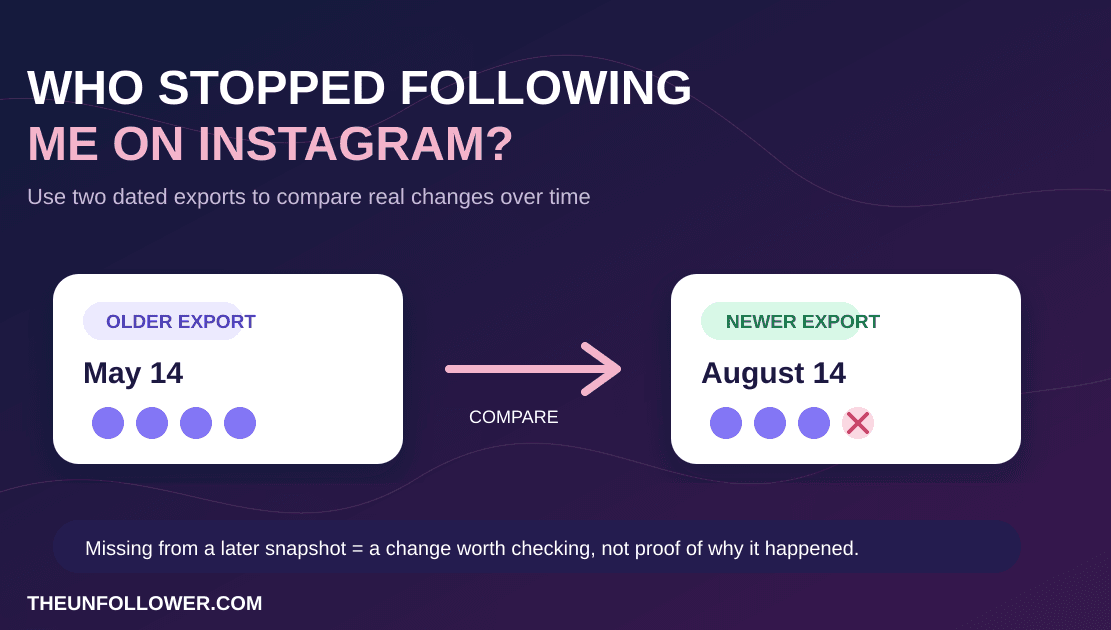
If you want change tracking, save archives on different dates and compare them. For most cleanup decisions, though, the current non-followers list is already enough.
How to use the lists without overreacting
Follower data can feel personal, especially when you notice someone does not follow you back. Try to treat the lists as account maintenance, not social judgment.
A practical review process:
- Start with obvious spam or irrelevant accounts.
- Keep accounts you still genuinely want to read.
- Do not unfollow important customers, collaborators, or friends just because they are not following back.
- Review fans for people you may want to notice or follow.
- Save another archive later if you want to compare changes.
The healthiest result is a cleaner feed and a clearer picture of your network.
How this differs from Instagram follower cleanup
The core idea is similar across platforms: compare followers and following. But each platform exports data differently and uses different file structures.
For Instagram, TheUnfollower also supports official data export analysis. For X/Twitter, use the dedicated X unfollower tracker so the archive parser looks for the right files.
Related guides
- Twitter follower tracker without login
- How to check who doesn't follow you back on X safely
- How to download your X/Twitter archive
FAQ
What is the difference between followers and following?
Followers are accounts that follow you. Following is the list of accounts you follow.
What does not following back mean?
It means you follow an account, but that account is not currently in your followers list.
Can my X archive show mutual followers?
If the archive includes the needed follower and following lists, a tracker can compare them and identify mutual relationships.
Should I unfollow everyone who does not follow me back?
No. Some accounts are still valuable to follow even if they do not follow you back. Use the list as a review tool, not an automatic rule.