Quick answer: followers vs. following on Instagram
Followers are the accounts that follow you. Following is the list of accounts you follow. The two numbers are related, but they are not the same thing: an account can follow you without you following it, you can follow an account that does not follow you back, or you can follow each other.
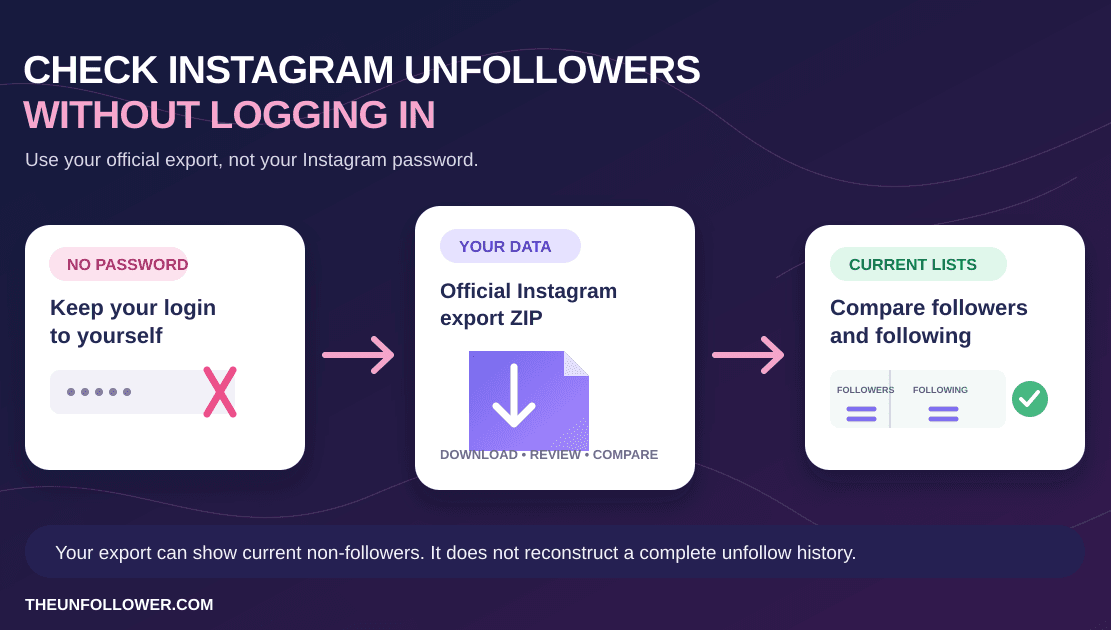
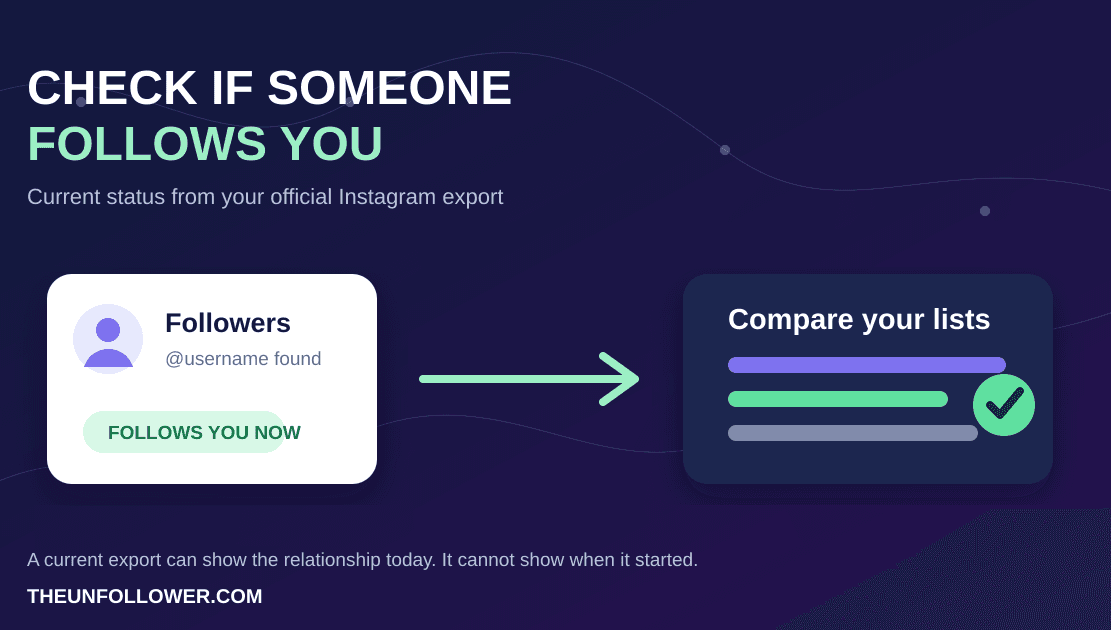
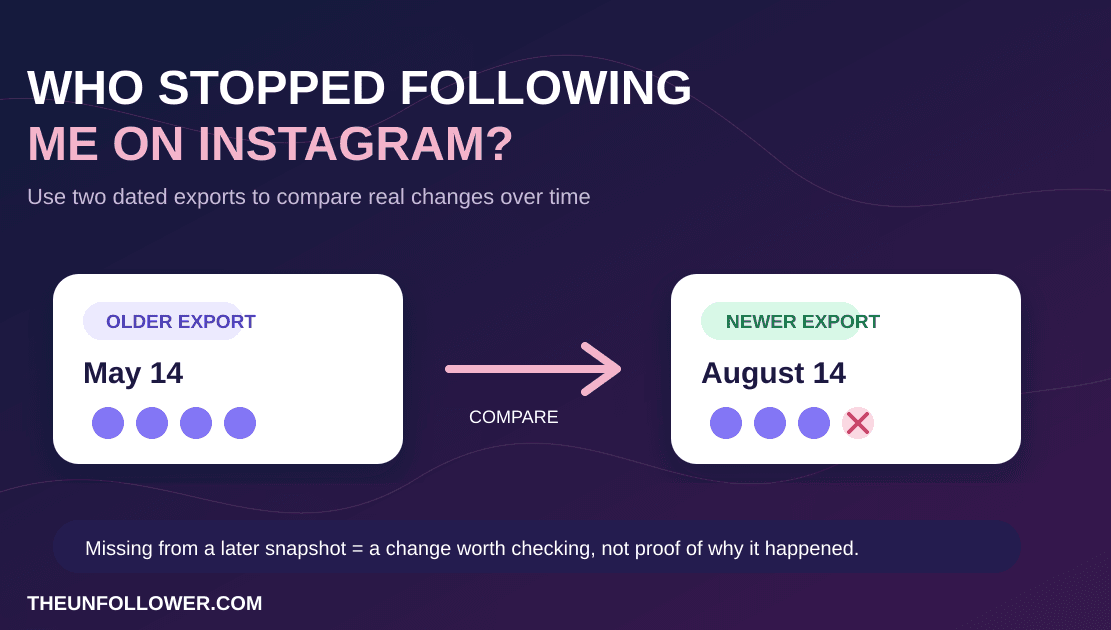
That difference is also separate from the question “who unfollowed me?” A single export can show the accounts you follow that do not follow you back now; it cannot prove who followed you in the past and later left without an older export to compare. For that distinction and the safe export-based workflow, read who unfollowed me on Instagram.
Understanding the follower-to-following ratio
Most Instagram growth advice focuses on getting more followers. More reach, more views, more comments, more saves. Those things matter, but they do not tell the whole story.
One of the simplest signals people notice when they visit your profile is your follower-to-following ratio: the relationship between how many people follow you and how many accounts you follow.
It is not the only metric that matters, and it is not a magic growth hack. But it does shape first impressions. A thoughtful ratio can make a creator profile look more credible, a business account look more intentional, and a personal brand look more focused.
What is the follower-to-following ratio?
Your follower-to-following ratio compares two public numbers:
- Followers: the number of accounts that follow you
- Following: the number of accounts you follow
The formula is simple:
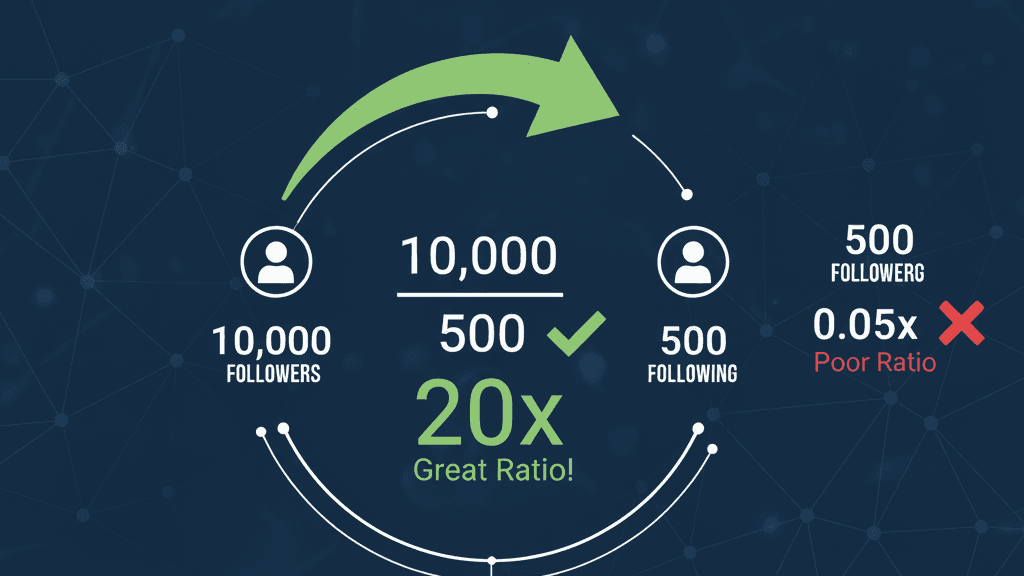
Followers / Following = Follower-to-following ratio
If you have 2,000 followers and follow 1,000 accounts, your ratio is 2.0, often written as 2:1. If you have 800 followers and follow 1,600 accounts, your ratio is 0.5, or 1:2.
The ratio gives visitors a quick impression of your account’s position in the network. Do more people choose to follow you than you choose to follow? Are you selective? Are you following thousands of accounts in the hope that some follow back?
Those impressions may not always be fair, but they are real.
Why your ratio matters
Instagram profiles are judged quickly. Before someone reads your captions or watches your Reels, they may glance at your profile photo, bio, grid, follower count, and following count.
Your ratio becomes part of that snap judgment.
It affects credibility
A profile following 6,000 accounts with 300 followers can look unfocused, even if the person behind it is genuine. Visitors may assume the account used follow-for-follow tactics or is not producing enough value to attract an audience naturally.
A balanced or positive ratio can feel more established. It suggests that people follow the account for a reason and that the account owner is not simply chasing attention.
This is especially important for creators, consultants, founders, artists, coaches, and local businesses. Your Instagram profile often acts like a landing page.
It improves your feed
Following too many accounts can make Instagram harder to use. Your feed becomes noisy, Stories become overwhelming, and you may stop engaging with people who actually matter to you.
Cleaning your following list is not only about changing a number. It improves the quality of your daily Instagram experience. A better feed can lead to more meaningful comments, better relationship-building, and stronger engagement habits.
It reveals old growth tactics
Many people have old follow patterns they would not choose today. Maybe you followed hundreds of accounts during a launch. Maybe you used follow-for-follow years ago. Maybe you followed giveaway pages, old classmates, brands, or niche accounts that no longer matter.
Your ratio can reveal that history. Cleaning it up helps align your profile with your current strategy.
What is a good follower-to-following ratio?
There is no universal perfect ratio. A healthy number depends on account size, niche, goals, and how you use Instagram. Still, these ranges can help.
Below 1:1
You follow more accounts than follow you. This is common for new accounts, personal accounts, students, hobbyists, and people who use Instagram mainly to keep up with others. It is not automatically bad, but professional accounts may want to review their following list.
1:1 to 2:1
This is a balanced range. It suggests you are active and social while still attracting a meaningful audience. Many healthy personal brands, small businesses, and early-stage creators live here.
3:1 to 5:1
This often signals stronger authority. You have noticeably more followers than accounts you follow, but you are not necessarily distant or inaccessible. For growing creators, it can be a useful target.
Above 5:1
This can look strong for established creators, public figures, media pages, and brands. But a high ratio alone does not guarantee quality. Fake followers and weak engagement can damage credibility. If you are tempted to buy followers, read why buying followers can destroy your Instagram.
How to calculate your ratio
To calculate your ratio:
- Open your Instagram profile.
- Note your follower count.
- Note your following count.
- Divide followers by following.
Example:
4,500 followers / 1,500 following = 3.0
That account has a 3:1 ratio. The exact decimal matters less than the direction. Are you becoming more intentional over time?
For a deeper comparison of options, see manual vs automated ratio calculation.
How to improve your ratio safely
There are two ways to improve the ratio: gain more followers or follow fewer accounts. The best strategy includes both, but cleaning your following list is the part you can control immediately.
1. Stop following by default
Before cleaning old follows, fix the habit that created the problem. Do not follow every account because they followed you, liked one post, or appeared in a recommendation.
Ask: “Will I still want to see this account in three months?” If the answer is no, do not follow.
2. Find accounts that do not follow you back
A large following list usually contains many one-way follows. Some are intentional. Some are not.
TheUnfollower helps you identify non-followers using your official Instagram export. You do not need to share your password or connect a live account. If you are new to the process, start with how to download your Instagram data.
3. Separate intentional follows
Not every non-follower should be removed. You may intentionally follow creators, publications, brands, restaurants, tools, or inspiration pages.
With Smart Tabs, you can protect important accounts, ignore clutter, and tag VIP accounts you follow for content or research. This prevents over-cleaning.
4. Unfollow gradually and manually
Once you have a clean review list, unfollow manually and gradually inside Instagram. Avoid mass unfollowing, bots, browser extensions, or tools that promise automated account actions.
Instagram may treat aggressive activity as suspicious. A safer cleanup is slower, deliberate, and based on your own decisions. Read more in manual vs automated unfollowing.
5. Keep improving your content
Unfollowing can improve the denominator in your ratio, but long-term improvement also requires follower growth. Focus on clear positioning, valuable Reels, useful captions, consistent Stories, and real community engagement.
A clean ratio helps people trust your profile. Strong content gives them a reason to follow.
Mistakes to avoid
Do not buy followers. It may improve the surface-level ratio, but it damages trust, engagement, and audience quality.
Do not unfollow aggressively. Large bursts of repetitive action can look automated, even when your intent is simple cleanup.
Do not remove accounts you actually value. A ratio is a guide, not a rule. If an account inspires you, teaches you, or supports your work, it may deserve a place in your following list.
Do not ignore engagement. A 10:1 ratio with no real community is weaker than a 2:1 ratio with loyal followers.
Related guides
To improve your ratio safely, first see who does not follow you back, then decide whether a broader Instagram following cleanup makes sense. If you are ready to remove accounts, follow the safe guide to unfollowing on Instagram manually and avoid shortcuts explained in manual vs automated unfollow tools.
FAQ
Is a high follower-to-following ratio always better?
Not always. A higher ratio can improve perceived authority, but it should not come at the expense of genuine relationships or useful content.
What ratio should a new account aim for?
New accounts can start around 1:1 while building community. As your audience grows, you can gradually become more selective.
Can TheUnfollower improve my ratio automatically?
TheUnfollower helps you find accounts that do not follow you back using your Instagram data export. It does not automate unfollowing. You stay in control.
How often should I clean my following list?
For most people, monthly or quarterly is enough. If you follow many accounts for campaigns or networking, review more often.
Build a ratio that reflects your real account
Your follower-to-following ratio is about clarity. It shows whether your account is intentional, maintained, and aligned with the audience you want to build.
If your following list has grown messy, upload your Instagram export to TheUnfollower, use Smart Tabs to separate important accounts from clutter, and improve your ratio without giving your password to a third-party app.