Instagram’s May 2026 Changes: Why Privacy-First Tools Matter More Than Ever
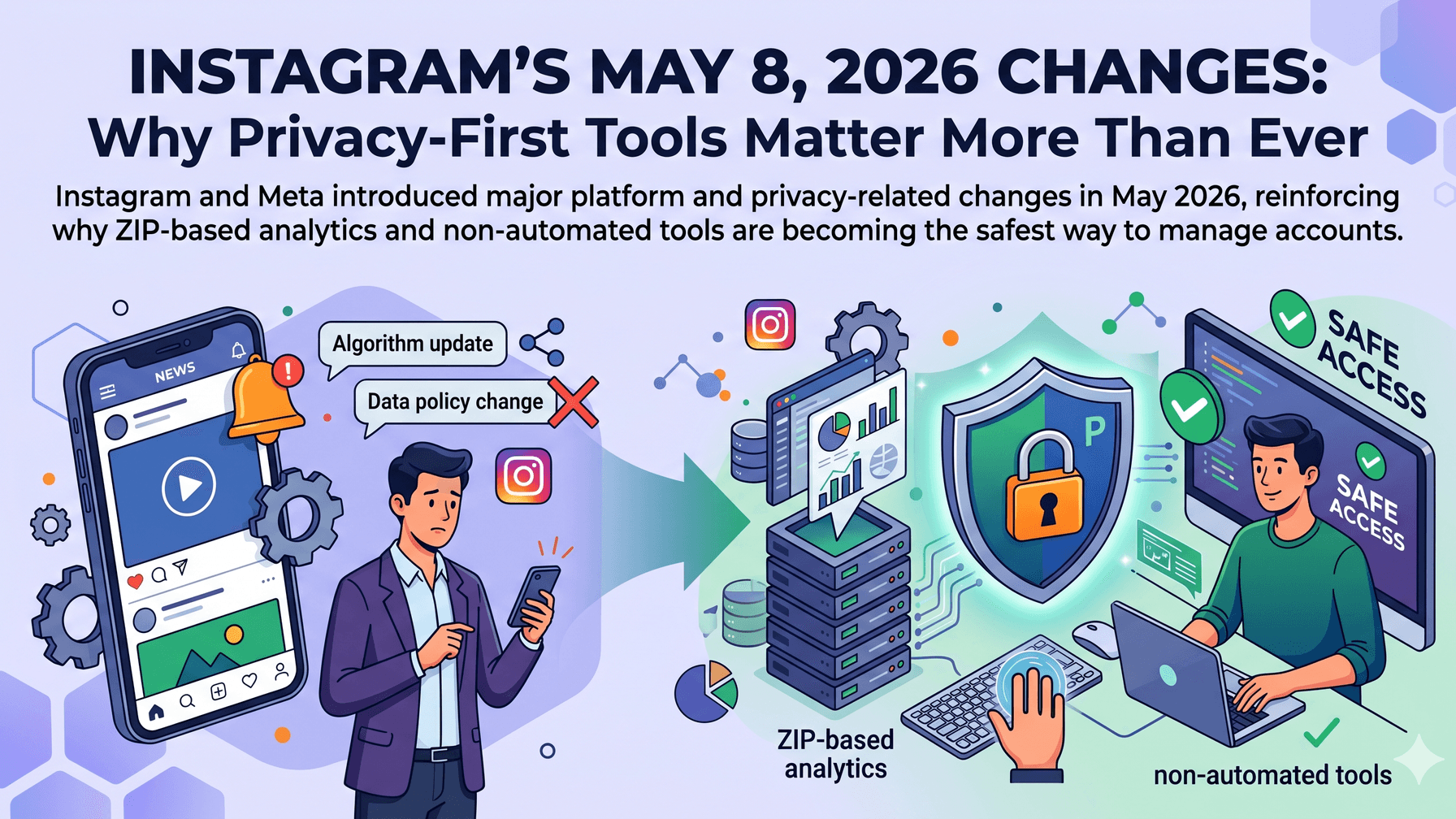
Instagram has been moving in one direction for years: tighter platform control, stricter automation enforcement, and higher expectations around privacy. The changes and conversations around May 2026 made that direction even clearer.
For creators, businesses, and everyday users, the safest Instagram tools are the ones that do not need your password, do not control your account, and do not scrape Instagram in the background.
That is especially important for follower-management tools. Many older apps were built for a more open era of Instagram. They promised live tracking, automatic unfollowing, and instant relationship data. But those promises often depended on fragile methods: unofficial APIs, browser automation, scraping, or direct login access.
In 2026, those methods are increasingly risky. A privacy-first, export-based workflow is becoming the more sustainable way to understand your Instagram account.
What changed around May 2026?
Instagram and Meta did not suddenly become restrictive overnight. The platform has been tightening third-party access for years. Early May 2026 reinforced several trends that affect anyone using Instagram analytics or unfollower tools.
Third-party access keeps shrinking
Meta’s official API ecosystem is much more limited than the older Instagram developer environment. Access to follower relationships, profile information, and account data is heavily controlled. Developers often face stricter review, narrower permissions, and less visibility into relationship data.
For users, this means many tools cannot reliably show the full picture through official APIs alone. Some platforms may show partial data, delayed data, estimated data, or data only for accounts that meet specific permission rules.
If a tool claims it can see everything instantly, it is worth asking how.
Scraping and automation face more pressure
When official access becomes limited, some tools try to work around it. They may simulate a browser, mimic user behavior, scrape profile pages, or run automated actions in the background.
That approach can create problems:
- It may require your Instagram login.
- It can trigger suspicious activity checks.
- It may stop working when Instagram changes the interface.
- It may violate platform rules.
- It creates another place where your account data could be exposed.
Instagram has strong incentives to detect behavior that looks automated, including repetitive follows, unfollows, scraping sessions, and unusual login patterns.
Users are more privacy-aware
People are more cautious about giving credentials to third-party tools, especially tools that ask to manage social accounts. Even when a tool is legitimate, users increasingly want to know what data is collected, where it is processed, and whether the tool can act on their behalf.
This matters because Instagram is no longer just a casual photo app for many people. It is a business channel, portfolio, storefront, community hub, or reputation layer. Losing access to an account or triggering restrictions can have real consequences.
Why older follower tools feel less reliable
Many traditional follower-tracking products were built around a live connection to your account. You logged in, the tool checked relationships, and sometimes it performed actions for you.
That model was convenient, but it depends on platform access that has become less stable.
Live data is harder to access safely
A tool that wants to know who follows you and who you follow needs relationship data. If it cannot obtain that data through an approved method, it has to choose between showing less information or using unofficial methods.
Users may experience problems like:
- login challenges
- broken syncs
- missing follower relationships
- outdated lists
- sudden feature removals
- temporary account restrictions
When a workflow depends on unofficial access, reliability can change overnight.
Automated unfollowing carries account risk
Unfollowing is a normal Instagram action. Automating it at scale is different.
If a tool performs repetitive actions quickly, Instagram may interpret the pattern as suspicious. Even if the goal is innocent cleanup, aggressive automation can look similar to spam behavior.
That is why TheUnfollower is built around analysis and manual decision-making. We help you understand your follower and following data, but you stay in control of the actions you take. For more context, read manual vs automated unfollowing on Instagram.
Password-based tools add exposure
Any tool that asks for your Instagram password increases your risk surface. You have to trust how the tool stores credentials, handles sessions, protects infrastructure, and responds if it is breached.
Even if the tool has good intentions, password sharing is a habit worth avoiding whenever possible. A safer tool should not need direct account access just to help you review your data.
The shift toward Instagram data exports
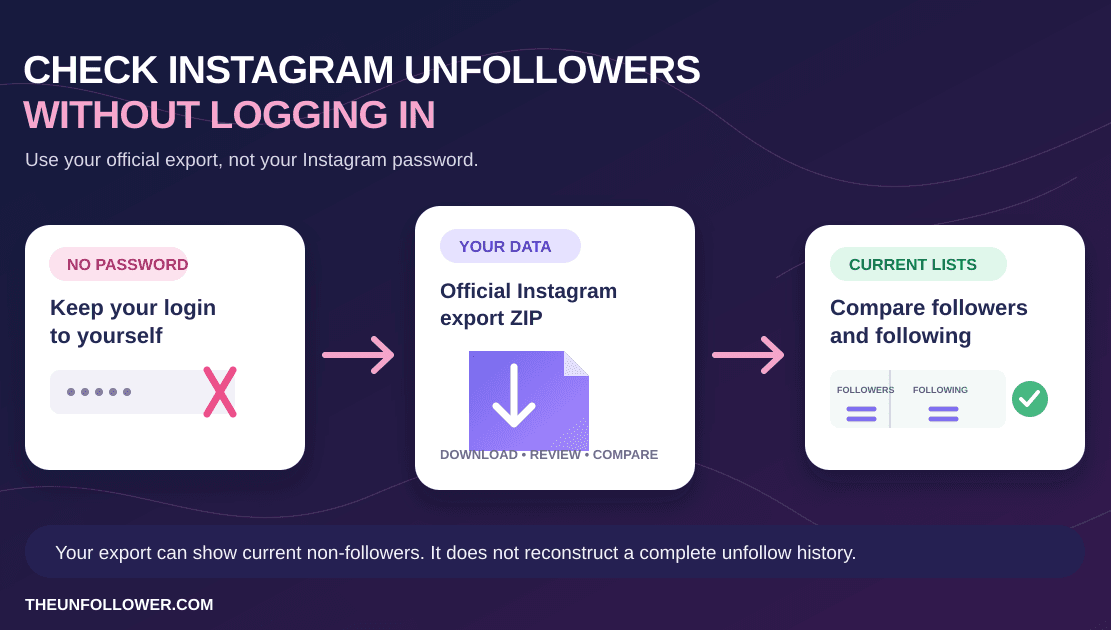
Instagram lets users download their own account data. That export can include follower and following information directly from Instagram.
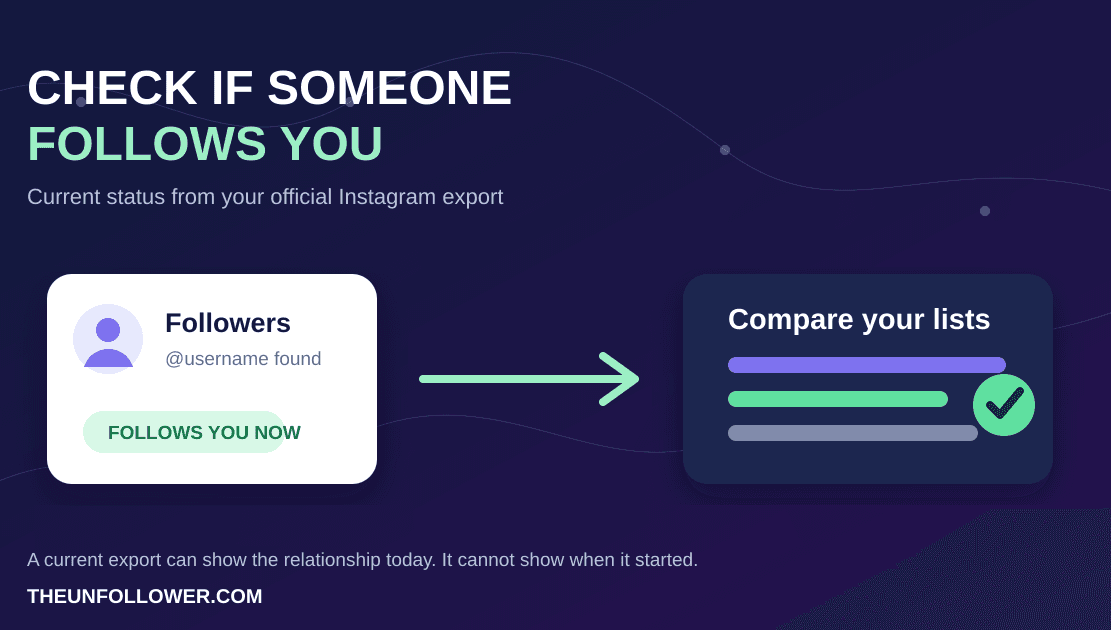
This creates a different model for follower analysis. Instead of logging into a third-party service, giving it account control, or allowing it to scrape Instagram, you request your data from Instagram and analyze the export.
You stay in control of access
With an export-based workflow, you do not hand over your Instagram password. The tool does not need to log in as you, maintain a session, bypass checks, or imitate your behavior.
You provide a file, review the output, and decide what to do next. If you have never downloaded your data before, follow our guide on how to download your Instagram data.
The data comes from Instagram
An export is not a guess from a scraped page. It is account data Instagram makes available to you. That makes it a strong starting point for follower and following analysis.
There can still be export quirks. Instagram data may be delayed, formatted differently, or occasionally inconsistent. We cover common issues in our guide to wrong Instagram follower and following ZIP files.
But export-based analysis is still preferable to a tool secretly scraping your account or relying on a fragile login session.
The workflow supports manual review
Export-based tools naturally encourage a healthier workflow. You upload data, review results, organize your list, and take action manually.
That pace is a feature. It reduces the temptation to mass-unfollow hundreds of accounts without context. It gives you time to protect friends, identify ghost accounts, and keep important one-way follows. TheUnfollower’s Smart Tabs are designed for exactly this kind of review.
What privacy-first follower management looks like
A privacy-first follower tool should help you make better decisions without demanding unnecessary access.
Look for these principles:
- No Instagram password required: Simple analysis should not require credentials.
- No automated account actions: The tool should not secretly follow, unfollow, like, message, or scrape as you.
- Clear data purpose: You should understand what your uploaded data is used for.
- Human review before action: A non-follower might be a friend, client, celebrity, or useful brand account.
- Helpful organization: Privacy-first tools can still provide non-follower detection, ratio insights, Smart Tabs, ignored accounts, and VIP labels.
Privacy-first does not mean basic. It means the tool is useful without taking unnecessary control.
Why this matters for creators and businesses
For a personal account, a temporary restriction is annoying. For a creator or business, it can interrupt revenue, campaigns, client communication, and community trust.
If Instagram is part of your livelihood, your account-management process should be conservative. A safer Instagram stack looks like this:
- Use official Instagram exports when possible.
- Avoid tools that require passwords for simple analysis.
- Avoid mass-action automation.
- Review follower data manually.
- Clean your following list gradually.
- Track your follower-to-following ratio as a signal, not an obsession.
TheUnfollower’s approach
TheUnfollower helps you understand Instagram relationships without handing over your account.
You upload the relevant follower and following files, review the results, and stay in control of every action.
With TheUnfollower, you can identify non-followers from official Instagram data, protect friends, ignore ghost accounts, tag VIPs, clean your following list at your own pace, and keep control over your Instagram account.
Related guides
The practical response to these changes is to rely on your official export, starting with how to download Instagram data safely. For cleanup decisions, compare manual vs automated unfollow tools, then use a password-free workflow to check who unfollowed you on Instagram. If numbers do not line up, read why your Instagram follower count may look wrong.
FAQ
Did Instagram ban all third-party tools in May 2026?
No. The key point is that Instagram’s platform direction continues to favor tighter access, less automation, and more controlled data flows. That makes privacy-first tools more attractive.
Are Instagram data exports always perfect?
No. Exports can contain quirks, stale entries, or formatting changes. But they come from your own Instagram account data and avoid the risks of password-based scraping tools.
Is TheUnfollower an automation tool?
No. TheUnfollower is an analysis and review tool. It helps you understand who does not follow you back, but you decide what to do manually.
Why not use an app that logs in for me?
Convenience can come with risk. Login-based tools may expose credentials, trigger suspicious activity checks, or break when Instagram changes access rules.
How often should I download my Instagram data?
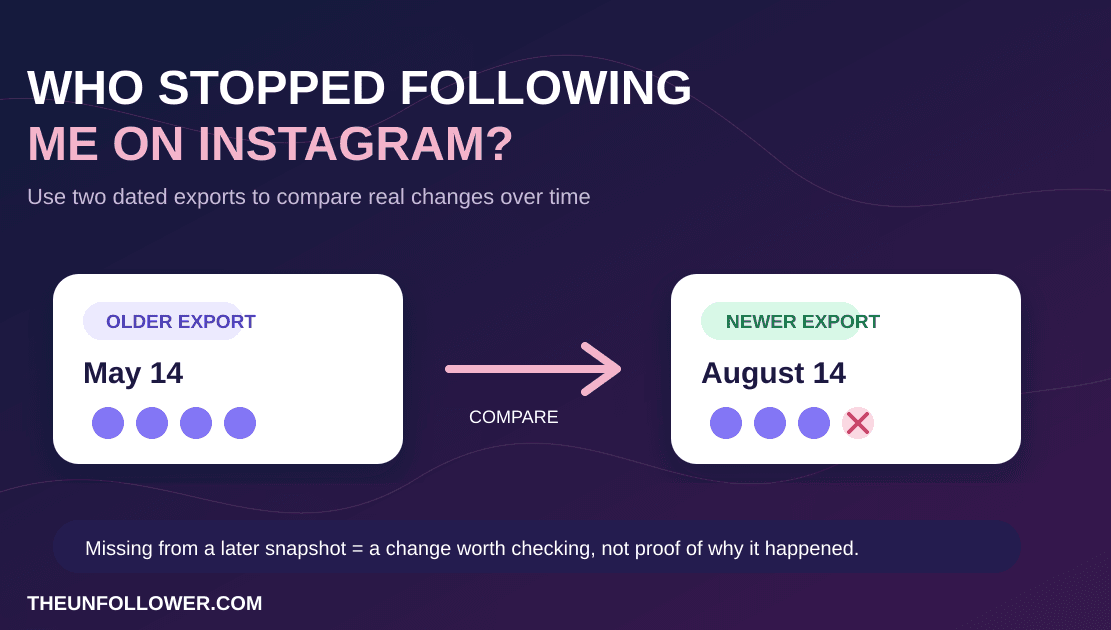
For most users, monthly or quarterly is enough. If you are actively cleaning a professional account, you may review more often, as long as you act gradually.
The future is privacy-first
Instagram’s May 2026 changes were part of a larger pattern: less tolerance for risky automation, tighter third-party access, and more scrutiny of how user data moves between platforms.
That does not mean you should stop managing your account. It means you should manage it differently.
Use official exports. Avoid password-sharing tools. Review before acting. Keep important accounts protected. Clean gradually.
When you are ready to review your Instagram following list safely, start with TheUnfollower. It gives you the clarity of follower analysis without asking you to give up control of your account.